The Future Arrived and Nobody Noticed
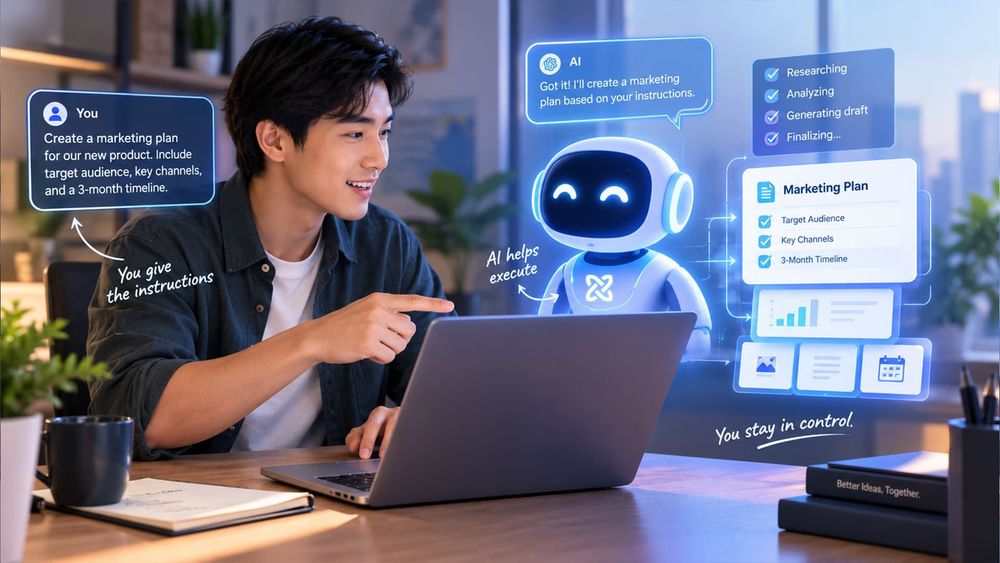
In 2002, we watched Tony Stark talk to JARVIS, an AI assistant that understood context, answered questions, and helped him solve problems in real-time.
People laughed. That's science fiction, they said.
In 2024, we got ChatGPT. An AI assistant that understands context, answers questions, and helps people solve problems. The only difference: JARVIS lived inside a suit. ChatGPT lives on your laptop.
This isn't the future. This is now.
And the tools that seemed like pure science fiction five years ago? They're not just real. They're available. They're practical. Some are FREE.
The Sci-Fi Concepts That Became Real
1. JARVIS (Iron Man) → AI Assistants
The Sci-Fi Vision: A natural language AI that understands what you want, helps you think through problems, and executes tasks.
The Reality: AI assistants can do exactly that.
Specific LLMs That Do This:
- ChatGPT (GPT-4o, GPT-4 Turbo) — Best for versatility and coding
- Claude 3.5 Sonnet — Best for nuanced reasoning and long-form writing
- Gemini 2.0 — Best for multimodal (text + images + video)
Real Use Case: A professional uses Claude to analyze a 50-page contract in minutes instead of hours. An entrepreneur uses ChatGPT to brainstorm product ideas. A student uses Gemini to understand a difficult concept.
2. Minority Report (Gesture Recognition) → Vision AI
The Sci-Fi Vision: Technology that sees and understands images, video, and gestures in real-time.
The Reality: AI models that can analyze images, videos, and even understand what's happening in them.
Specific LLMs With Vision Capabilities:
- GPT-4 Vision — Best for detailed image analysis and reasoning
- Claude 3.5 Vision — Best for nuanced visual understanding and document analysis
- Qwen VL — Best for text-heavy images and document understanding
Real Use Case: A real estate agent uploads 50 property photos. AI describes each one instantly. A researcher feeds in 200 medical scans and gets an analysis. A designer uploads a photo and asks "what colors are dominant?"
3. Her (Theodore's OS) → Conversational AI
The Sci-Fi Vision: An AI that feels like talking to a person. Natural conversation. Understanding nuance. Emotional intelligence.
The Reality: Modern AI assistants that can engage in surprisingly natural, nuanced conversations.
Specific LLMs Best at Conversation:
- Claude 3.5 Sonnet — Best for conversational depth and emotional nuance
- ChatGPT (GPT-4o) — Best for natural, human-like dialogue
- Mixtral Instruct — Best for instruction-following conversation
Real Use Case: A writer has a conversation with Claude about character development and gets feedback like a writing coach. An entrepreneur talks through business problems with ChatGPT and gets Socratic pushback instead of just answers.
4. Blade Runner (Photorealistic Generation) → AI Image Creation
The Sci-Fi Vision: The ability to imagine something and have it created visually, perfectly.
The Reality: AI image generators that create photorealistic images from text descriptions.
Specific Image Generation Models:
- DALL·E 3 — Best for photorealism and complex scenes
- Stable Diffusion 3 — Best for open-source, local generation
- Flux Pro — Best for fast, high-quality generation
Real Use Case: A startup needs product photography but can't afford a shoot. They generate perfect images. A marketer creates 20 variations of an ad visual in minutes. An artist explores 100 visual ideas without sketching.
5. 2001: A Space Odyssey (HAL 9000) → Reasoning AI
The Sci-Fi Vision: An AI that can reason through complex problems, catch logical flaws, and think several steps ahead.
The Reality: Modern reasoning models that can tackle math, science, and logic problems at a level that rivals human experts.
Specific Reasoning-Focused LLMs:
- Claude 3.5 Sonnet — Best for multi-step reasoning and explanation
- DeepSeek-R1 — Best for open-source reasoning capabilities
- Qwen QwQ — Best for math and science reasoning
Real Use Case: An engineer uses reasoning AI to debug a complex system. A researcher uses it to verify mathematical proofs. A strategist uses it to think through multi-step business problems.
6. Ex Machina (Self-Improving AI) → Fine-Tuning and Training
The Sci-Fi Vision: AI that learns and improves from experience.
The Reality: The ability to train AI models on your own data, making them better at your specific tasks.
Specific LLMs Offering Fine-Tuning:
- GPT-3.5 Turbo / GPT-4 — Fine-tuning available via OpenAI API
- Llama 2 & 3 Fine-Tuning — Open-source fine-tuning
- Custom Models (Anthropic) — Enterprise custom training
Real Use Case: A law firm trains an AI on their case files so it understands their legal strategy. A company trains an AI on customer support chats so it can respond in their voice. A researcher trains an AI on domain-specific papers.
7. Terminator (Predictive AI) → Pattern Recognition
The Sci-Fi Vision: An AI that sees patterns humans miss and predicts what comes next.
The Reality: AI that can analyze data, find patterns, and make predictions.
Specific LLMs for Pattern Recognition:
- GPT-4 with Code Interpreter — Best for data analysis and predictions
- Claude 3 with Extended Thinking — Best for complex pattern analysis
- Gemini 2.0 with Analysis — Best for multimodal pattern detection
Real Use Case: A retailer predicts which customers are likely to leave and targets them with offers. A manufacturer predicts equipment failure before it happens. An analyst predicts market trends from data patterns.
8. Black Mirror (Deepfakes/Synthetic Media) → AI Generation & Manipulation
The Sci-Fi Vision (The Dark Side): Create synthetic media that's indistinguishable from real.
The Reality (The Responsible Side): AI that can generate, edit, and enhance media, with responsibility.
Specific Tools and Models:
- ElevenLabs — AI voice generation and cloning
- Synthesia — Avatar video generation
- Google DeepDream — Artistic media manipulation
Real Use Case: A YouTuber generates a voice for narration without hiring a voice actor. A filmmaker uses AI to remove unwanted objects from scenes. A creator generates realistic backgrounds for videos.
Important: This technology has risks. The responsible use is what matters.
9. The Matrix (Digital Worlds) → AI Simulation & Modeling
The Sci-Fi Vision: Create digital simulations and worlds.
The Reality: AI that can generate and simulate environments, scenarios, and worlds.
Specific 3D and Simulation Tools:
- DALL·E 3 + Unreal Engine — Generate assets, then use in engine
- Stable Diffusion 3D — 3D model generation
- Unreal Engine + Blueprint AI — World building with AI assistance
Real Use Case: An architect generates 3D renderings of a building before construction. A game developer generates game assets and environments. A city planner simulates urban planning scenarios.
10. Westworld (Learning Behavior) → Adaptive AI
The Sci-Fi Vision: AI that adapts to you, learns your preferences, and gets better at serving you over time.
The Reality: AI systems that adapt based on feedback and improve through interaction.
Specific Adaptive LLMs:
- ChatGPT Memory Feature — Remembers conversation context across sessions
- Claude Conversation History — Learns from ongoing dialogue
- Anthropic Preference Learning — Adaptive to user preferences
Real Use Case: An AI writing assistant learns your voice and style. A recommendation engine learns what you like. A chatbot remembers previous conversations and builds on them.
How to Actually Use These Today
Here's the thing: the LLMs already exist. They're available right now. Some are free, some are paid.
Five years ago, the question was, "Will AI ever be able to do this?"
Today, the question is, "Which AI tool should I use to do this?"
The tools that once felt impossible are now practical, affordable, and accessible to anyone with an internet connection.
You can use them individually, mixing and matching the models that fit your needs, or you can use platforms like AI-PRO that bring them together in one place. Either way, the technology that once belonged in science fiction is available right now.
The only question left is: What will you do with it?